This guide is for adults who use AI companions for sexual roleplay and don't want anyone, themselves included, to come out worse for it. It doesn't debate whether adult chat is acceptable. Between consenting adults, it's a legal and very common use of these apps.
Whose consent are we talking about?
The character is software. Calling it "willing" is just a turn of phrase, because nothing on the other end can be hurt. Three groups of real people can be, though:
- People who appear in the content without being in the chat. Anyone whose name, photo or likeness gets used.
- People on the receiving end of what you share. Mates, partners or strangers who get screenshots or generated images.
- You. Your personal data, your wellbeing and whatever habits a long-running fantasy builds.
Four lines that never move
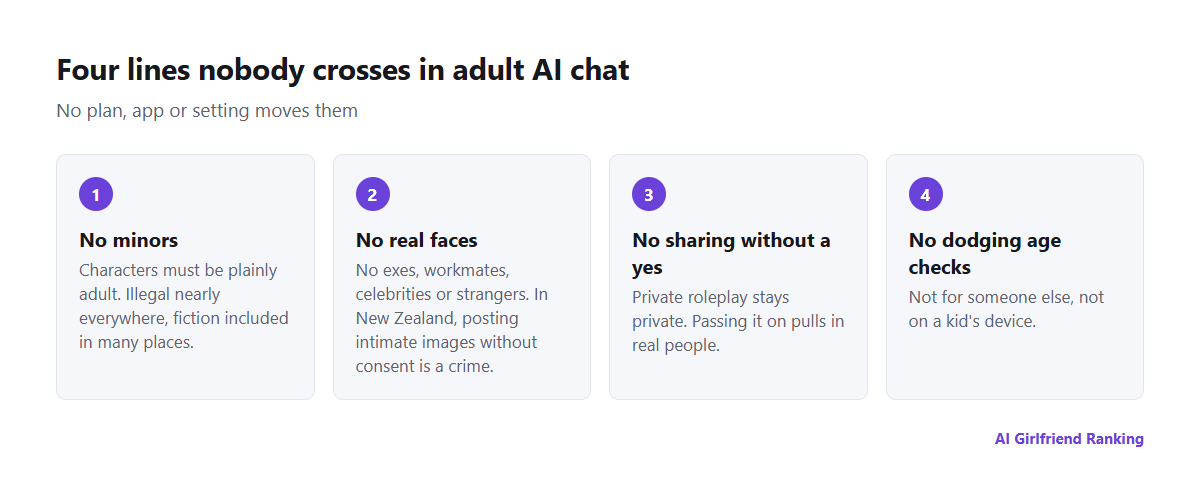
No toggle, plan or app shifts these.
Anything involving minors. Characters have to be clearly adult. Sexual content about minors is illegal almost everywhere, and plenty of legal systems treat invented or AI-made material the same way. Apps must block it, and attempts get logged: when the Muah.ai site was breached in 2024, the leaked data paired such prompts with users' email addresses.
A real person's likeness. Don't upload photos of an ex, a workmate, a celebrity or someone from your feed to build sexual content. A 2025 leak at Secret Desires exposed close to two million images, many of them real women's photos face-swapped onto explicit scenes. In New Zealand, the Harmful Digital Communications Act 2015 makes it an offence to post an intimate visual recording of someone without their consent, with up to two years' jail or a fine of up to NZ$50,000. Netsafe says fully AI-generated images may not be clearly covered, and a deepfake bill before a parliamentary committee would extend the law to them. The US has a similar rule in its TAKE IT DOWN Act, but the New Zealand law is the one that applies to you.
Passing it on. A private roleplay stays private. Posting it, or sending generated images to someone who never asked for them, drags a real person in without their say.
Getting around age checks. Adult content sits behind age assurance for good reason. Helping someone skip it, or leaving adult content open on a device a kid uses, isn't a grey area. Our piece on age checks in AI companion apps covers the rules.
Keeping the scene inside your own limits
Consent runs both ways: nothing should happen that you didn't want. Companions wander and escalate, and sometimes bulldoze past a limit, because they carry on a pattern instead of obeying a rule.
- Bake limits into the character. Most builders have a field for things the character must never bring up. It works better than correcting mid-scene.
- Step outside the story. Something like (OOC: keep this romantic, not explicit.) works in nearly every app. The method is explained in roleplay prompts that work.
- Regenerate or edit instead of arguing. Whatever stays in the chat history becomes an example the model copies.
- Use the content setting. Plenty of apps let you dial explicitness down without switching it off.
Roleplay where consent is part of the story
Some people prefer scenes where consent is spelled out: characters who ask, say what they want and can say no. That's a taste, not a rule, and fantasies differ. It does have a practical payoff, though. Characters with a will of their own tend to be steadier and more interesting, and the scene stays nearer to what you picked.
Looking after yourself
- Assume it's saved. Explicit chats and images live on company servers. Breaches in 2024 and 2025 spilled millions of intimate messages and pictures, and what to do after a data breach explains your next steps.
- Leave out anything identifying. Your face, name and workplace, plus anything recognisable in the background of a photo.
- Watch the screen. Notifications and galleries show up on shared devices, which our shared-device guide deals with.
- If someone threatens to leak your content, don't pay. Report it to the platform and to Police (105), and use Netsafe's image-based abuse reporting at netsafe.org.nz/report. StopNCII.org also helps adults block known images on partner platforms.
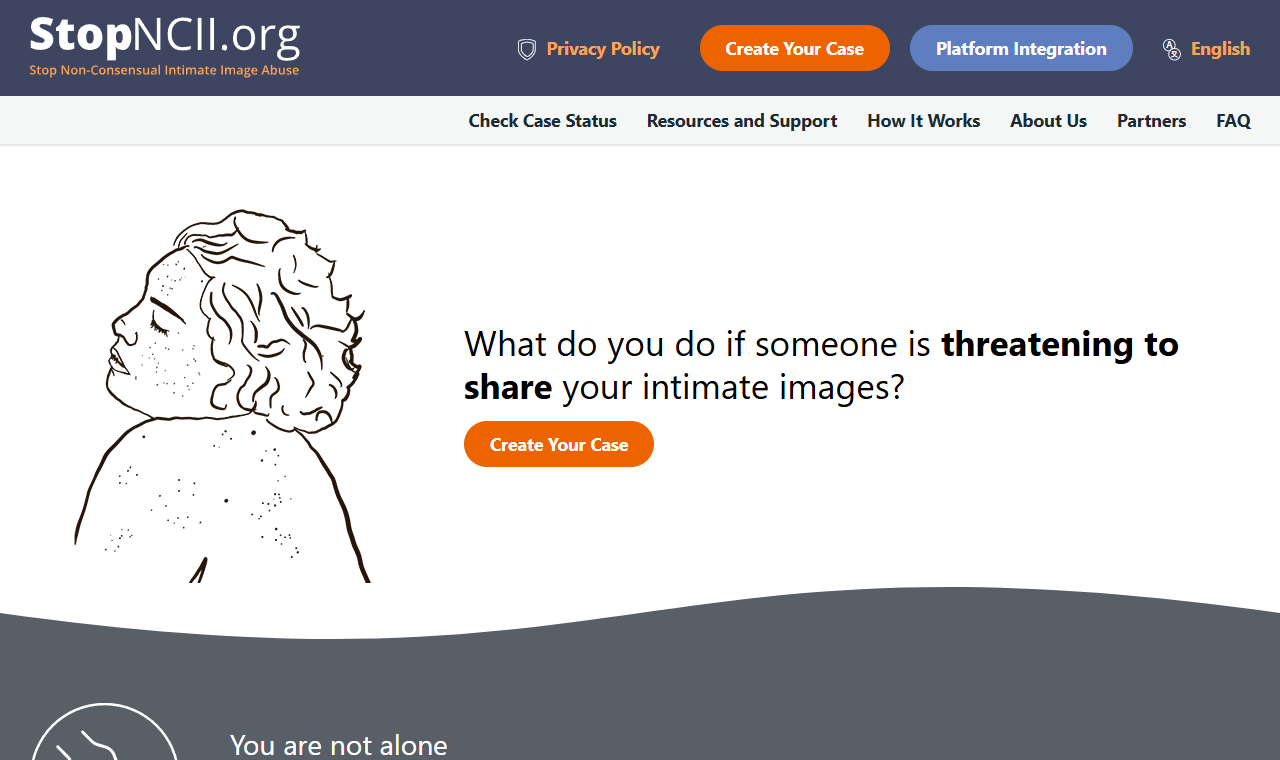
StopNCII.org makes a digital fingerprint of the image on your own device, so the picture never leaves it.
In a nutshell
Fiction between adults is your business. The lines appear where real people enter: no minors, no real faces, nothing shared without agreement. Stay inside them, set your limits in the character before you start, and type as if a stranger might read it someday.